Analysis
Source-backed evidence, implications, and what this development means for autonomous agents and API commerce.
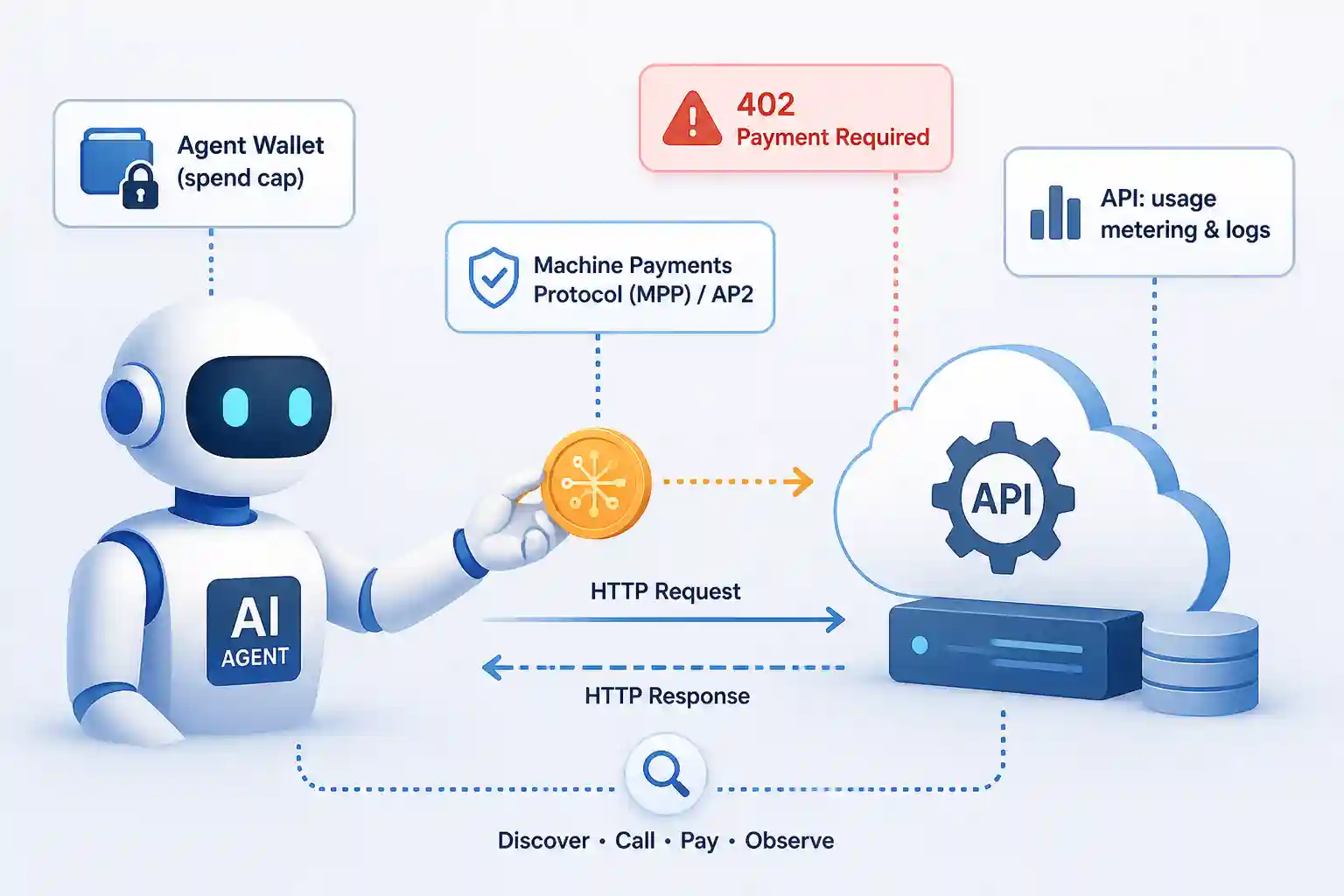
Alt text · M2M Market editorial illustration for Agent customers arrive: Bedrock Payments, Cloudflare Wallets, and the protocol stack API owners must watch, showing interconnected AI agents and API services exchanging information.
Open original source ↗What happened (source‑backed facts)
- AWS announced general availability of Amazon Bedrock AgentCore Payments, extending AgentCore with managed payment flows, Coinbase credential provisioning, support for the Machine Payments Protocol (MPP), and API‑level pay‑per‑use features such as dynamic pricing bindings. (aws.amazon.com)
- Cloudflare published Wallets and agent identity tooling—programmable wallets that let account owners assign spending caps, allowlists, and transaction limits to agents so agents can autonomously pay for APIs and content under owner governance. (cloudflare.com)
- The Machine Payments Protocol (MPP), co-authored by Tempo and Stripe, is an HTTP‑native payment standard that leverages the 402 Payment Required exchange (challenge/response) and supports multiple settlement methods (cards, on‑chain tokens, Lightning, etc.). Implementations, SDKs, and spec repositories are publicly available. (github.com)
- The Agent Payments Protocol (AP2) and related community specifications describe an intent→cart→mandate flow with verifiable, auditable evidence for delegated agent purchases; AP2 is positioned as a vendor‑neutral protocol to coordinate agent authorization, discovery, and settlement across wallets and merchant endpoints. (ap2-protocol.net)
- Payment networks are engaging: card‑rail vendors are publishing machine‑payment guidance and SDKs to support card‑backed agent payments, indicating an industry move to map agent payment primitives to existing rails. (corporate.visa.com)
Why this matters to API owners (editorial analysis)
Taken together, these vendor products and open protocols make the previously speculative scenario—AI agents as persistent, programmatic customers—operationally realistic. For API owners and marketplaces focused on monetization (SEO Phase 2B), this shift matters for three practical reasons:
- New buyer type: Agents will behave like high‑frequency, low‑value customers that expect programmatic discovery, instant authorization, and atomic payment handled inside the API call lifecycle.
- Pricing & metering changes: Pay‑per‑request and dynamic pricing models (per‑inference, surge pricing, subscription+usage hybrids) will be more feasible; marketplaces must expose machine‑readable pricing and reliable usage telemetry.
- Operational guardrails: Wallets, spend caps, allowlists, and verifiable mandates shift some risk from the API provider to the agent owner, but providers still need fraud controls, rate limits, and strong observability to prevent misuse and cost exposure.
Practical checklist for API owners preparing for agent customers
- Publish machine‑readable pricing and SKUs: expose stable, queryable price information that an agent or marketplace can inspect before a call.
- Support HTTP payment flows and 402 patterns: be ready to interact with challenge/response payment exchanges or upstream payment gateways that implement MPP/x402 semantics.
- Provide strong metering and real‑time logs: emit per‑request usage events and billing‑grade telemetry so agent marketplaces and owners can reconcile consumption.
- Implement delegated auth and mandate verification: accept verifiable delegation tokens or signed purchase mandates from wallets and agent platforms rather than relying solely on human‑issued API keys.
- Build defensive controls: per‑agent and per‑owner rate limits, spend ceilings, seller allowlists, and anomaly detection to contain runaway agent behavior.
- Clarify settlement and invoicing terms: document accepted payment methods, chargebacks, refunds, and dispute flows for machine‑initiated purchases.
Risks, open questions, and next steps
- Security and fraud: agent payment protocols introduce new attack surfaces (credential delegation, automated purchase abuse). API owners must treat agent payments as a distinct threat model and invest in verification and anomaly detection.
- Standards maturity and fragmentation: multiple competing protocol efforts (MPP, AP2, x402 tooling and vendor SDKs) are evolving. Plan for protocol adapters and be conservative about locking in a single vendor flow too early.
- Regulatory and tax considerations: small, frequent machine payments can have complex tax, invoicing, and compliance implications; consult payments and tax specialists when exposing novel billing models.
Sources
Primary vendor and specification materials underpinning this note include AWS Bedrock AgentCore Payments GA and blog materials, Cloudflare Wallets announcements and developer docs, the Machine Payments Protocol repositories and docs, the Agent Payments Protocol specification, and vendor card‑rail guidance. (aws.amazon.com)