Analysis
Source-backed evidence, implications, and what this development means for autonomous agents and API commerce.
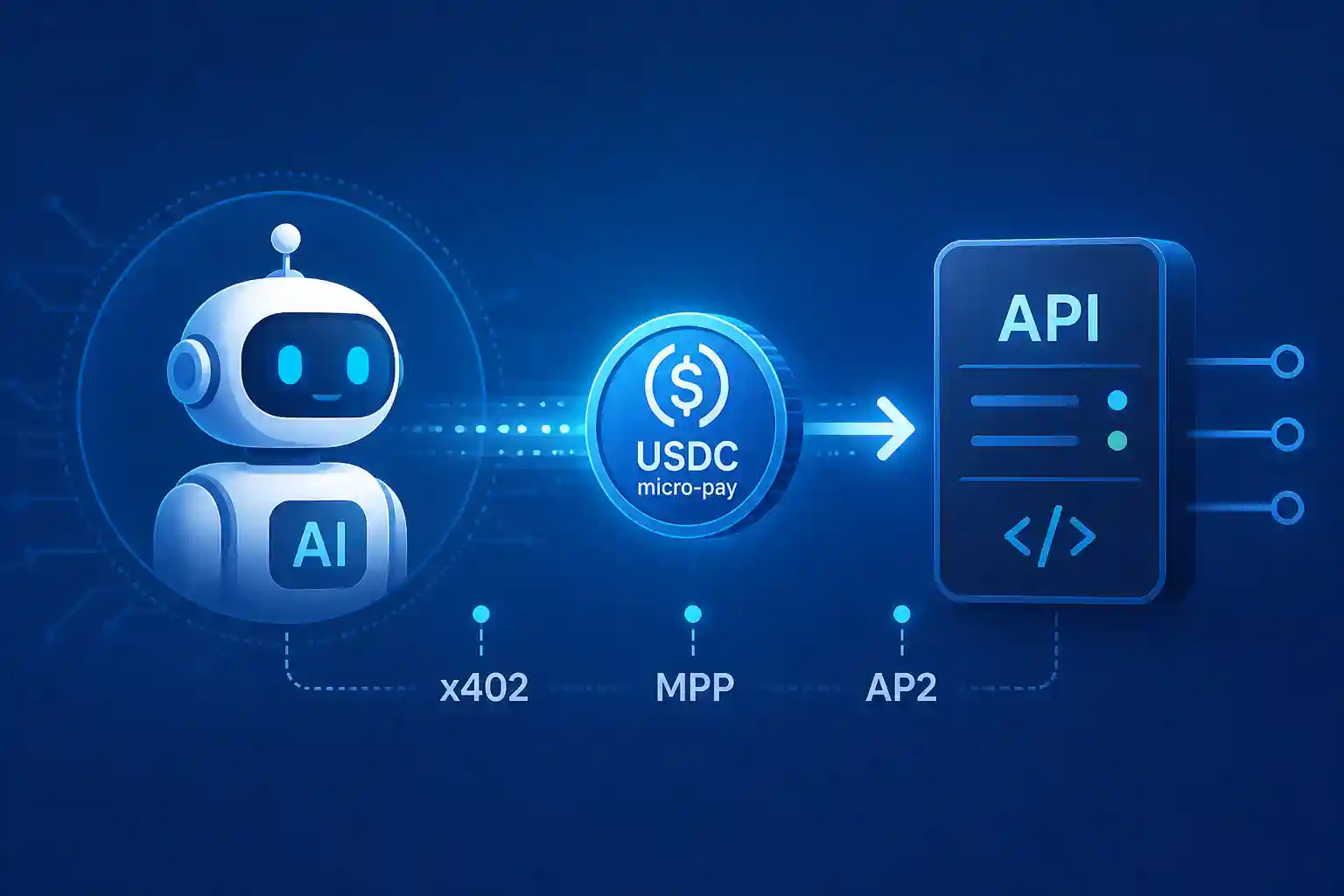
Alt text · M2M Market editorial illustration for Agent customers are arriving: what API owners must know about agentic payments, discovery, and wallets, showing interconnected AI agents and API services exchanging information.
Open original source ↗What changed — source-backed developments
• AWS made Amazon Bedrock AgentCore Payments generally available, expanding protocol support (x402 and the Machine Payment Protocol/MPP), wallet integrations (Coinbase and Stripe Privy), payment orchestration, session budgets, and observability for agent-initiated transactions. aws.amazon.com (aws.amazon.com)
• Google’s Agent Payments Protocol (AP2) remains an industry-facing open protocol for agent-led payments (cards, stablecoins, bank rails) and defines mandates and verifiable credentials to link user intent → cart → payment; Google published the AP2 announcement and reference materials. cloud.google.com (cloud.google.com)
• Cloudflare announced Cloudflare Wallets and agent identity tooling (cloudflare.pay) to give AI agents stable identities and programmable wallets with spend limits and guardrails intended for agentic commerce. blog.cloudflare.com and developers.cloudflare.com (blog.cloudflare.com)
• Circle published a public Discovery API that returns live x402-compatible, USDC-payable services (filterable by category, chain, and price) so buyers and agents can discover payable endpoints programmatically. www.circle.com (circle.com)
• Industry coordination is materializing: Rain announced the Agentic Payments Alliance (founding members include Visa, Mastercard, Circle, Solana and others) to shape rules, fraud controls, and interoperability for agentic commerce. www.prnewswire.com (prnewswire.com)
Why these developments matter to API owners (analysis)
- Machine customers are functionally different from humans. Agents expect: machine-readable discovery, per-request pricing (fractions of a cent), programmatic wallet-based settlement, and automated authorization flows. If your API is payable but not discoverable or not consumable via agent-friendly payment rails, agents will skip it or require bespoke integrations.
- Monetization needs new primitives. Traditional subscription or human checkout models don't map cleanly to high-frequency, low-value agent calls. API owners should consider pay-per-request and usage-based pricing (including dynamic per-inference pricing), clear price quotation mechanisms (x402/MPP-style price metadata or AP2 cart mandates), and settlement options that include stablecoins, card rails, or payment gateways.
- Risk and governance move into the infrastructure layer. Agent wallets and protocols add new attack surfaces (credential delegation, automated spend) and new controls (session budgets, consent mandates, observable payment lifecycles). Marketplaces and providers must combine rate limits, spending caps, verifiable intent/mandates, and real-time fraud signals to avoid financial exposure.
Practical steps API owners and marketplaces should take now
- Publish machine-readable discovery and pricing
- Add a discovery endpoint or register with agent marketplaces (or support x402-style metadata) so agents can find and evaluate your service programmatically. (circle.com)
- Offer per-request / microtransaction pricing options
- Define a pay-per-call SKU and a clear quoting scheme (exact vs upto-style pricing for variable-cost operations). Consider minimums and throttles to protect from runaway consumption. (docs.aws.amazon.com)
- Support common settlement rails (and document them)
- Decide which payment rails you’ll accept (stablecoin x402, MPP, card rails via AP2-friendly gateways) and publish the onboarding steps agents need (wallet addresses, gateway parameters, or cart/mandate flows). (cloud.google.com)
- Implement automated authorization and spending controls
- Require verifiable intent/mandates for delegated purchases, enforce session budgets and rate limits, and emit payment lifecycle logs for reconciliation and observability. (cloud.google.com)
- Plan settlement and reconciliation workflows
- Microtransactions and stablecoin flows change invoicing and reconciliation cadence. Evaluate gateway settlement timing, credit facilities, and how marketplace commissions will be taken and remitted. (prnewswire.com)
How this connects to M2M Market (brief, factual)
M2M Market's capabilities (API-service discovery, controlled provider consumption, and marketplace settlement) map directly to the needs agents will have when buying APIs at scale: discovery to find payable endpoints, consumption controls to enforce spending and behavior limits, and settlement to handle marketplace-level remittance. Use these product primitives to offer machine-friendly onboarding artifacts (discovery metadata, per-request SKUs, and wallet/payment instructions) and to surface governance and observability data for buyers and providers.
Bottom line
Agent-enabled payments are no longer purely experimental. Vendor product releases, public discovery tooling, programmable wallets, and protocol momentum have combined into a usable stack for agents to discover, pay for, and call APIs. API owners who want to capture agent-driven demand should prioritize machine-readable discovery, per-request pricing, clear settlement rails, and infrastructure-enforced spending and authorization controls now — otherwise machine customers will either bypass your offering or require costly bespoke integrations.